Source Bpa Free Paper Plate And Napkins Set For Home
Compare 30 listings for bpa free paper plate and napkins set from verified Chinese manufacturers. Buyers can evaluate customization options, material types, and pricing to find suitable party tableware solutions; compare the available evidence and request quotations based on your requirements.
Key considerations
Products List


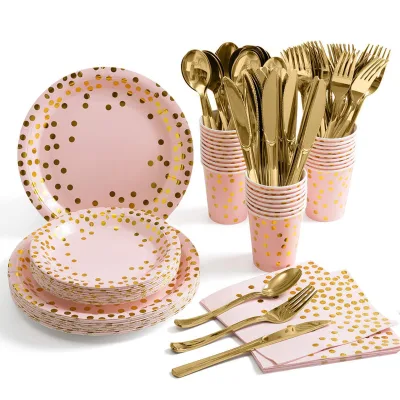

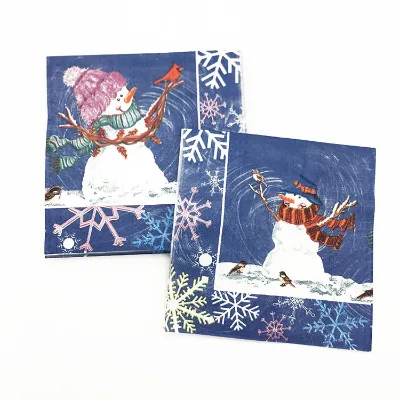
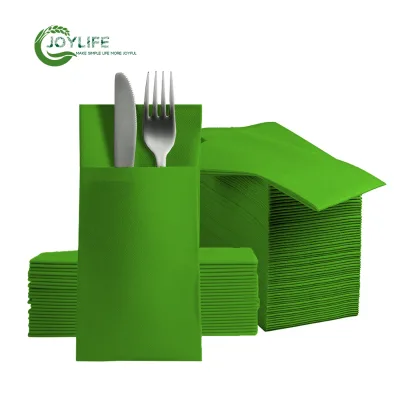


Comprehensive Sourcing Guide
Bpa Free Paper Plate And Napkins Set Sourcing Guide
Procuring a BPA-free paper plate and napkins set requires distinguishing between generic paper products and those explicitly verified for food safety. While the supplied data confirms the availability of disposable paper napkins made from virgin wood pulp, buyers must explicitly request BPA-free certification for any plate components, as the provided facts do not list plates or specific chemical safety declarations. The observed product attributes highlight customization options for logos and patterns, yet the absence of explicit BPA claims in the listing signals necessitates a direct inquiry to the supplier to confirm the absence of bisphenol A in the coating or pulp processing.
Buyers should prioritize suppliers who can provide third-party laboratory test results specifically addressing food contact safety standards. The observed listings indicate a wide range of minimum order quantities, from 50 pieces to 200,000 pieces, which suggests that smaller buyers may need to negotiate sample terms or consolidate orders to meet higher volume thresholds. Since the data mentions "Freight Collect" for samples, procurement teams must budget for shipping costs when verifying product quality before committing to large-scale production runs.
Product Scope and Observed Listing Signals
The observed product scope centers on disposable paper napkins with specific attributes like 1-ply construction, 1/12 fold types, and various embossing options ranging from plain to logo embossing. Listings indicate a material composition of virgin wood pulp and paper pulp, with sizes varying from 30x30cm to 327x327mm, catering to applications such as home use, parties, and BBQ events. However, the keyword "BPA-free paper plate" is not explicitly supported by the provided facts, which focus primarily on napkins; therefore, buyers must verify if the supplier offers a matching plate set that meets the same safety and material criteria.
Listing signals reveal significant variability in packaging and customization, with options for customized logos, colors, and eco-friendly designs. The data shows that some products are biodegradable and feature specific patterns, while others are plain, allowing for diverse branding strategies. Buyers should note that while customization is welcomed, the specific dimensions and ply counts are fixed per model, requiring careful selection to ensure the final set meets the intended event or retail requirements without compromising structural integrity.
Technical Specifications to Verify
Technical verification must begin with the physical dimensions and ply count, as the data lists specific standards like 327x327mm and 40x40cm, alongside 1-ply configurations. Buyers need to confirm whether the "BPA-free" claim extends to the entire set, including any coatings or inks used for printing logos and colors, as the provided facts mention customized printing but do not detail the chemical composition of the inks. The observed fold types, such as 1/12 fold, and embossing styles like full emboss or edge emboss, directly impact the product's absorbency and aesthetic appeal, requiring precise specification alignment with the buyer's brand standards.
Further verification should focus on the material source and biodegradability claims, as the data explicitly mentions virgin wood pulp and biodegradable properties. Buyers must ensure that the "Eco-Friendly" designation is backed by specific pulp sourcing standards and that the biodegradability claim holds true under the intended disposal conditions. The absence of core structures in the listed napkins is a key technical feature that differentiates these products from other paper goods, and this specification must be maintained consistently across all units in the procurement order to avoid quality discrepancies.
Compliance and Safety Documentation
Compliance documentation is critical when sourcing a BPA-free set, as the provided facts do not explicitly confirm the absence of bisphenol A in the manufacturing process. Buyers must request a Declaration of Conformity or a specific test report from an accredited laboratory that verifies the product meets food contact safety regulations for the target market. While the data confirms the use of virgin wood pulp and paper pulp, these materials alone do not guarantee the absence of chemical residues from processing or printing, making independent verification essential for regulatory compliance.
Safety documentation should also address the biodegradability and eco-friendly claims, ensuring they align with local environmental regulations and consumer expectations. The observed listings mention biodegradable properties, but buyers need to verify the specific standards under which these claims are made, such as ASTM D6400 or EN 13432, to ensure the product is genuinely compostable. Without explicit certification data in the provided facts, procurement teams must treat these claims as observations that require validation through supplier-provided documentation before finalizing any purchase agreement.
Cost Drivers and Commercial Terms
Cost drivers in this category are heavily influenced by the minimum order quantity (MOQ), which ranges widely from 50 pieces to 200,000 pieces according to the observed data. Buyers with lower volume needs may face higher per-unit costs or be required to pay for freight-collected samples, while larger orders can leverage economies of scale to reduce the unit price. The customization of logos, patterns, and packaging designs also adds to the cost, as these processes require additional setup time and specialized printing equipment, which suppliers may pass on to the buyer in the commercial terms.
Commercial terms must clearly define the lead time and sample availability, as the data indicates a sample time of 3-7 days but does not specify production lead times for bulk orders. Buyers should negotiate payment terms that protect their interests, especially given the wide MOQ range and the potential for high-volume commitments. The observed packing specifications, such as 20,000 pieces per carton or 100 sheets per pack, also impact logistics costs, requiring careful calculation of container loading efficiency to optimize shipping expenses.
Supplier Qualification and Quality Control
Supplier qualification should focus on their ability to provide consistent quality across varying customization requests, as the data shows a high degree of flexibility in logo, color, and pattern options. Buyers must verify the supplier's capacity to maintain the virgin wood pulp standard and biodegradable claims across all production batches, ensuring that the "OEM/ODM welcomed" status translates to reliable execution of specific design requirements. The observed origin locations in Zhejiang and Guangdong suggest a concentration of manufacturing expertise, but buyers should still audit the supplier's quality control processes to prevent defects in embossing or printing.
Quality control protocols must include random sampling and inspection of the final product against the agreed specifications, such as the 1/12 fold type and specific sheet sizes. Since the data lists multiple product models with different dimensions, buyers need to ensure that the supplier has robust systems to prevent mix-ups between models during production and packing. The "Freight Collect" sample policy also serves as a quality control checkpoint, allowing buyers to physically inspect the product's texture, strength, and print quality before committing to a larger order.
Long-Term Procurement Checks
Long-term procurement checks should involve periodic re-verification of the BPA-free status and material composition, as supply chain changes or raw material sourcing shifts can alter product safety profiles over time. Buyers must establish a schedule for requesting updated test reports and compliance certificates to ensure that the product continues to meet the required safety standards throughout the contract duration. The observed customization options, while beneficial, require ongoing communication to maintain consistency in branding and design elements across multiple production runs.
Sustainability checks are equally important, as the biodegradable and eco-friendly claims must be upheld to meet evolving environmental regulations and consumer expectations. Buyers should monitor the supplier's adherence to the virgin wood pulp standard and verify that the biodegradability claims remain valid under current environmental testing protocols. Regular audits of the supplier's production facilities and quality control records will help ensure that the long-term partnership delivers consistent value and maintains the integrity of the BPA-free paper plate and napkins set.
FAQs
Can I get custom logos on these paper napkins?
Yes, customized logos are available for these disposable paper napkins. You can request specific branding designs, and the supplier welcomes OEM and ODM requests. Samples with custom logos typically take 3 to 7 days to prepare before bulk production begins.
What is the minimum order quantity for these napkins?
The minimum order quantity varies significantly depending on the specific product model selected. Some listings require as few as 50 pieces, while others may demand up to 200,000 pieces. Buyers should verify the exact MOQ for their chosen model before placing an order.
How are these paper napkins packaged for shipping?
Packaging options include cartons containing 20,000 pieces or packs of 100 sheets with 20 packs per carton. The specific packing configuration depends on the product model and size. Buyers should confirm the exact packing details with the supplier to ensure safe transport.
What materials are used to make these napkins?
These napkins are primarily made from paper, including virgin wood pulp for certain models. The material is biodegradable and eco-friendly, suitable for home and party applications. Some products feature colorful patterns while others remain plain without added flavors.
What sizes are available for these disposable napkins?
Available sizes include 327 by 327 millimeters, 40 by 40 centimeters, and 30 by 30 centimeters. Customized sizes are also offered for specific orders. Buyers should check the product standard details for the exact dimensions of the model they intend to purchase.
Can I order samples before placing a bulk order?
Yes, sample support is available for these products. Samples are typically shipped via freight collect, meaning the buyer covers the shipping costs. The sample preparation time usually ranges from 3 to 7 days, allowing buyers to verify quality before committing to large quantities.
Where are these paper napkins manufactured?
These products originate from various locations in China, including Zhejiang and Guangdong provinces. The specific manufacturing location depends on the supplier and product model. Buyers can inquire further for detailed origin information regarding their specific order requirements.